
A Practical Guide for Foreign Investors Entering Vietnam
Vietnam continues with it strategic positioning as a key investment destination in Asia. Strong economic growth, deepening global trade integration, a young and skilled workforce, and rapidly developing infrastructure continue to position the country as a strategic hub for international investors. As global supply chains diversify and Southeast Asia becomes an increasingly important centre for manufacturing, technology, and services, Vietnam is attracting growing attention from companies seeking both production capacity and access to a fast-growing domestic market.
However, successfully entering Vietnam requires more than recognising its economic potential. The country operates within a regulatory and administrative framework that differs significantly from many Western and regional jurisdictions. Corporate structures, investment licensing, taxation, employment rules, and accounting standards all follow distinct local requirements. For foreign investors, understanding these frameworks early is critical to avoiding delays, compliance risks, and costly restructuring later.
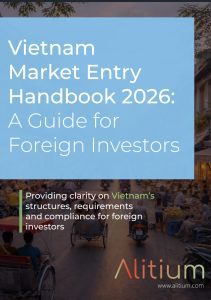
The Vietnam Market Entry Handbook 2026, prepared by Alitium, provides a clear and practical overview of the legal, structural, and operational considerations involved in establishing and operating a business in Vietnam. Drawing on Alitium’s experience supporting international companies entering and expanding within Vietnam, the handbook distils the key regulatory frameworks and compliance requirements that foreign investors must navigate.
Vietnam’s economic environment forms an important context for any market entry strategy. The country has experienced sustained economic growth over the past decade, driven by export-oriented manufacturing, strong foreign direct investment inflows, and increasing participation in global trade agreements. Vietnam’s population of over 100 million people, expanding middle class, and rising consumer spending also present significant opportunities for companies targeting domestic markets. At the same time, Vietnam has positioned itself as a critical node in global supply chains across sectors such as electronics, textiles, machinery, and consumer goods.
Corporate Structures and Market Entry Framework
Entering this market requires careful planning around corporate structuring and regulatory approvals. Vietnamese law provides several structures through which foreign investors can operate, including Limited Liability Companies (LLCs), Joint Stock Companies (JSCs), representative offices, and branch offices. Each structure carries different implications for ownership flexibility, governance arrangements, capital structure, and regulatory obligations. Selecting the appropriate structure at the outset is often one of the most important strategic decisions for investors.
Foreign-invested enterprises must also navigate Vietnam’s investment licensing framework. Establishing a foreign-owned company typically involves obtaining an Investment Registration Certificate (IRC) and an Enterprise Registration Certificate (ERC), along with a series of subsequent registrations and operational steps before the business becomes fully operational. Capital contribution timelines, corporate governance appointments, bank account structures, tax registrations, and labour registrations are all part of the establishment process that investors must manage.
Business Lines and Market Access Conditions
Vietnam also regulates business activities through a system of registered “business lines,” which determine the activities a company is legally permitted to undertake. Certain sectors are fully open to foreign investors, while others are subject to conditions or restrictions depending on Vietnam’s domestic regulations and its commitments under international trade agreements. Understanding how market access rules apply to specific industries is an important part of structuring an investment correctly from the outset.
Vietnam’s Corporate Tax Landscape
Taxation represents another key area of complexity for foreign investors. Vietnam’s tax system includes several core taxes that apply to foreign-invested enterprises, including Corporate Income Tax (CIT), Value Added Tax (VAT), Personal Income Tax (PIT), Foreign Contractor Withholding Tax (FCWT), and Special Sales Tax (SST) for certain goods and services. In addition to these core obligations, investors must also consider dividend repatriation rules, capital gains taxation, and the application of Vietnam’s network of Double Tax Agreements, which can help mitigate cross-border tax exposure.
Vietnam has also strengthened its transfer pricing framework in recent years, aligning more closely with international standards and increasing compliance expectations for multinational groups. Companies operating across multiple jurisdictions must ensure appropriate documentation and pricing policies are in place to meet local regulatory requirements.
Human Resources and Labour Compliance
Human resources and labour compliance are equally important aspects of operating in Vietnam. The country maintains a comprehensive labour law framework governing employment contracts, internal labour regulations, salary structures, social insurance contributions, and employee records. Employers must also comply with procedures for hiring foreign employees, including the work permit process and related regulatory approvals. For companies building teams in Vietnam, early alignment with labour regulations helps ensure operational stability and avoid compliance risks.

Accounting Standards and Reporting Requirements
Financial reporting requirements are governed by Vietnamese Accounting Standards (VAS), which differ in several respects from international accounting frameworks such as IFRS. Companies must maintain accounting systems that comply with VAS requirements and adhere to strict reporting obligations, including tax filings, statutory financial statements, and annual audits in certain cases. Vietnam has also been rapidly digitalising its tax and regulatory reporting systems, increasing both efficiency and transparency in the interaction between businesses and authorities.
Governance and Long-Term Compliance
Across all of these areas, governance and compliance play a critical role in the long-term success of foreign-invested enterprises. Vietnam’s regulatory environment continues to evolve as the government strengthens enforcement, modernises administrative systems, and increases transparency expectations. Companies that establish strong governance frameworks from the outset are better positioned to adapt to regulatory changes and maintain stable operations as they grow within the Vietnamese market.
A Practical Resource for Investors
The Vietnam Market Entry Handbook 2026 serves as a practical reference for investors considering entry into Vietnam or expanding their existing operations. By bringing together the key legal, regulatory, and operational considerations in one place, the handbook provides a structured overview of the factors that shape successful investment in the country.
For companies evaluating Vietnam as part of their regional expansion strategy, understanding these frameworks is an essential first step. The full handbook provides deeper insights into Vietnam’s investment environment and offers practical guidance to help investors navigate the country’s evolving business landscape with confidence.
Download the Full Guide:
To explore the regulatory frameworks, corporate structures, and compliance requirements in greater detail, download the Vietnam Market Entry Handbook 2026.
The full publication provides practical insights, regulatory summaries, and structured guidance to help foreign investors navigate Vietnam’s evolving business environment with confidence.
For tailored advice on market entry, structuring, compliance or expansion strategy, please contact our Vietnam team at vietnam@alitium.com
This guide is intended as a general overview only and does not constitute legal or tax advice. While it aims to present useful insights, it is important to note that the content shared here should not be considered as formal legal, tax or financial advice. For specific guidance on tax obligations or legal matters related to your business, we strongly recommend consulting with a qualified professional, such as a tax advisor or legal expert or directly reach out to us.