How three ASEAN economies are emerging as complementary hubs for manufacturing, capital structuring, and operational investment in a shifting global landscape.
The global investment landscape in 2026 is marked by geopolitical complexity not seen in decades. Regional conflicts, disruptions to maritime trade routes, energy market volatility, and shifting trade alliances have changed how international investors assess risk. The premium on jurisdictional stability and regulatory predictability is rising.
Southeast Asia is well positioned in this environment. The region’s neutrality in major geopolitical rivalries, its network of trade agreements, and its track record of maintaining economic stability through successive shocks, from pandemics to trade wars to energy disruptions, have made it a preferred destination for capital seeking growth and security in equal measure. According to the ASEAN Investment Report 2025, FDI inflows into ASEAN rose 8% to US$226 billion even as global FDI declined by 11%. The region has also overtaken China as the preferred manufacturing investment destination for OECD-headquartered companies.
What does this mean in practice for foreign investors weighing their options? Three Southeast Asian markets illustrate the opportunity, each with a distinct role in the regional investment ecosystem.
Vietnam: Manufacturing at Scale
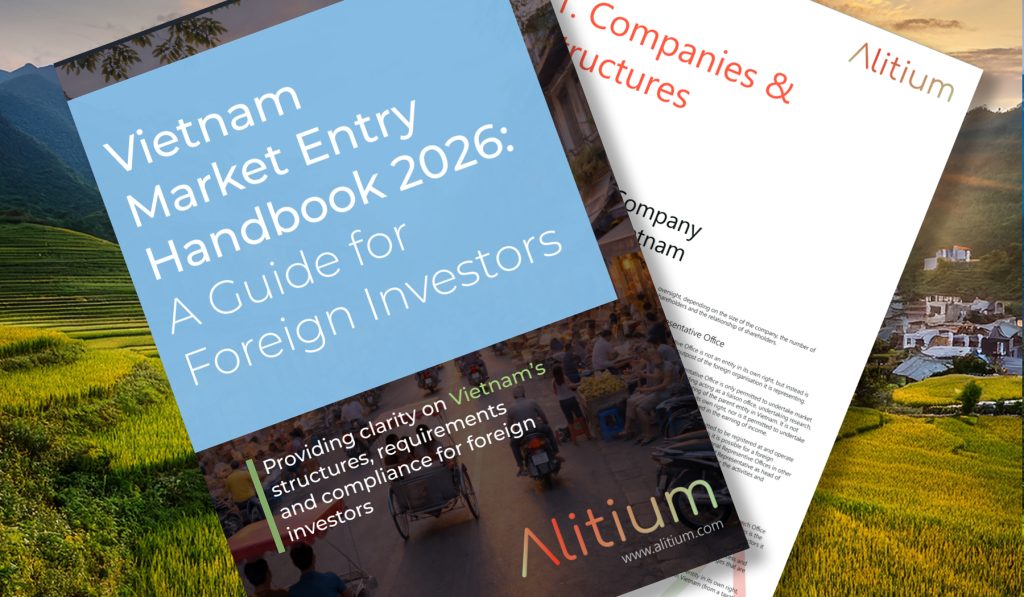
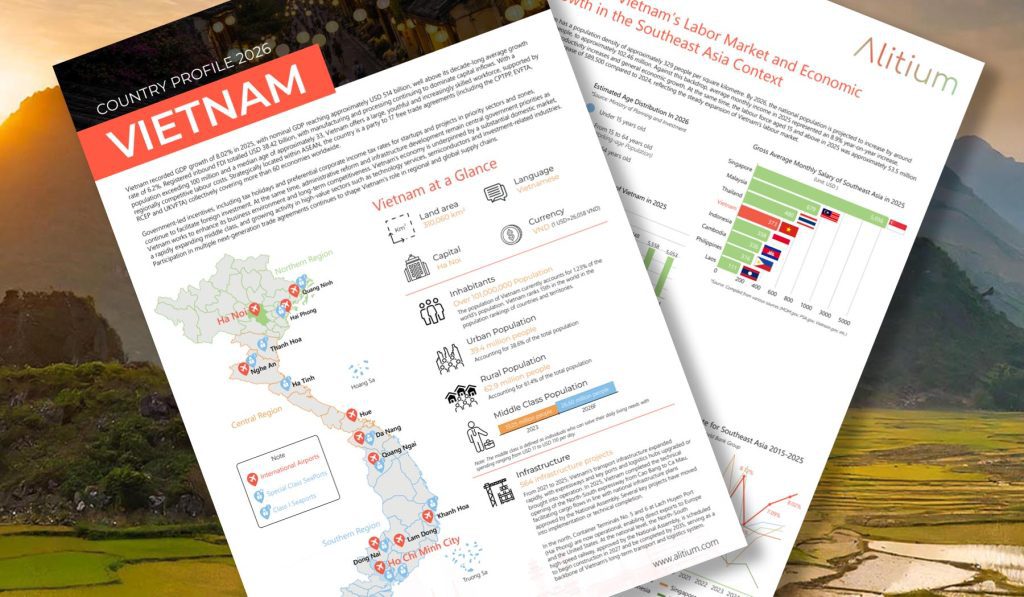
Vietnam’s shift from low-cost assembly base to credible advanced manufacturing hub is one of the past decade’s clearest investment trends. Competitive labour costs, a young workforce, and preferential market access through the CPTPP and the EU–Vietnam Free Trade Agreement have helped the country build production clusters that are now attracting global capital at pace.
Vietnam exceeded 8% GDP growth in 2025. Total registered FDI reached US$21.5 billion in the first half of the year, up 32.6% year-on-year, with manufacturing absorbing over 56% of that capital. New manufacturing project registrations rose 40%. Electronics exports contributed over 30% of total exports in 2024.
The regulatory framework has kept pace. Recent reforms have streamlined industrial-zone development, clarified land-use rights for foreign investors, and extended tax holidays and import-duty exemptions for qualifying investments. Vietnam permits 100% foreign ownership in most manufacturing sectors and has set a target to train 50,000 semiconductor engineers by 2030, a signal of where the country intends to compete next. For manufacturers seeking a base that combines cost efficiency with growing capability, Vietnam is hard to look past.
Singapore: The Region’s Wealth and Structuring Hub
Singapore’s role extends well beyond its domestic economy. It is the region’s primary node for wealth management, fund structuring, and cross-border capital deployment, a position built through deliberate regulatory design and consistent policy signalling.
The family office ecosystem has grown rapidly, with the number of single family offices surpassing 2,000 by end-2024 managing assets projected to exceed S$120 billion (US$94 billion). Capital has come from China, India, Indonesia, and increasingly from the Middle East and Europe. Total assets under management reached US$5.41 trillion, making Singapore the fourth-wealthiest city globally.
Regulatory reforms in 2025 balanced speed with rigour. The Monetary Authority of Singapore set a target to process family office tax incentive applications within three months, while tightening anti-money-laundering requirements following a high-profile enforcement action in 2023. The Variable Capital Company framework has added structural flexibility for fund management. For UHNW families and institutional investors choosing where to domicile their wealth management operations, Singapore’s combination of political stability, professional depth, and regulatory clarity sets it apart.
Malaysia: Fiscal Competitiveness and Operational Depth
Malaysia has quietly become one of ASEAN’s standout investment destinations. Geographic centrality, an English-speaking workforce, established clusters in semiconductors and medical devices, and a streamlined incentive framework have made it a consistent draw for multinational investors.
This shows a clear trajectory. Malaysia attracted RM285.2 billion (US$72.5 billion) in approved investments in the first nine months of 2025, up 13.2% year-on-year, with foreign investment surging 47.5%. Approved investments hit a record RM378.5 billion (US$96.2 billion) in 2024, and the country climbed from 34th to 23rd in the IMD World Competitiveness Ranking. Budget 2025 introduced the New Investment Incentive Framework, consolidating over 200 tax incentives and aligning them with global minimum tax policies. Sector-specific support covers semiconductors, green technology, digital infrastructure, and advanced manufacturing.
For investors evaluating where in ASEAN to establish or expand operations, Malaysia’s fiscal competitiveness, infrastructure, and pro-business policy environment make it a proposition that is increasingly hard to overlook.
How Alitium Supports Foreign Investors Across the Region
Operating across Vietnam, Singapore, and Malaysia means navigating three distinct legal systems, tax regimes, and compliance environments simultaneously. Getting the structure right at the outset, and maintaining it as regulations evolve, is where many foreign investors find they need a partner with genuine on-the-ground presence.
Alitium was founded to serve exactly this need. With offices in Ho Chi Minh City, Hanoi, Singapore, and Malaysia, we provide integrated support to foreign enterprises across the full lifecycle of their regional operations: from market entry and cross-border entity structuring through to ongoing compliance, accounting, tax, payroll, and corporate secretarial services.
Our particular strength lies in FDI advisory and cross-border structuring, helping investors design holding and operating structures across multiple ASEAN jurisdictions that are tax-efficient, transfer-pricing defensible, and compliant from day one. We act as a single point of coordination, so that our clients can focus on their growth while we manage the regulatory complexity across borders.
To discuss how we can support your investment into the region, contact us at contact@alitium.com or visit www.alitium.com.
********
This article is intended to provide an overview of recent updates, announcements and laws. While it aims to present useful insights, it is important to note that the content shared here should not be considered as formal legal, tax or financial advice. For specific guidance on tax obligations or legal matters related to your business, we strongly recommend consulting with a qualified professional, such as a tax advisor or legal expert or directly reach out to us.