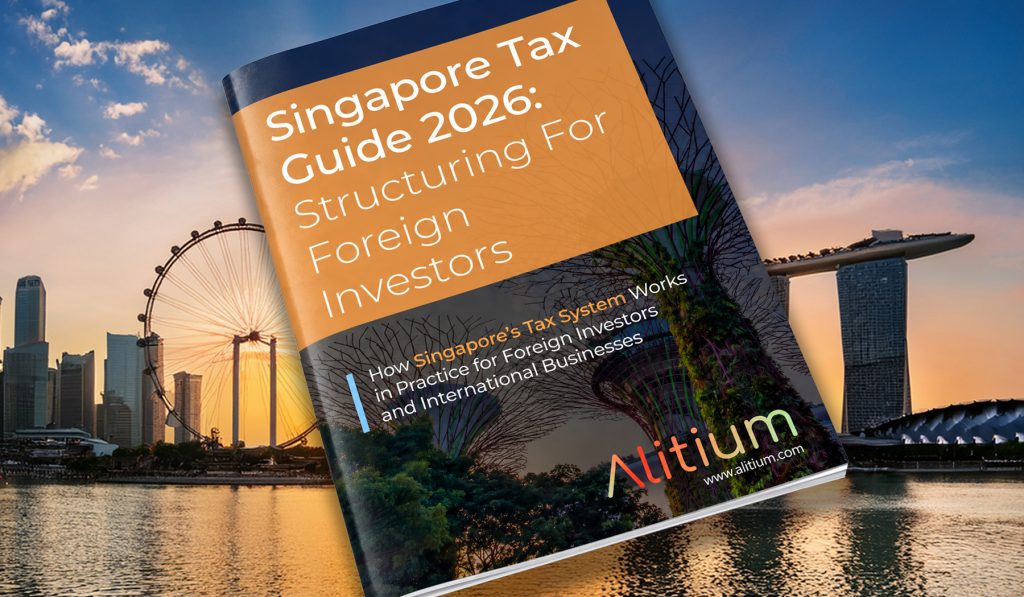
Understand how Singapore’s tax system works in practice, from corporate income tax and GST to holding companies, cross-border payments and compliance, in 2026.
Singapore is an established base for international businesses investing, trading and expanding across Asia. For companies establishing a regional headquarters, holding investments or managing operations across ASEAN, understanding its tax framework is an important part of building a sustainable business structure.
The starting point is familiar: Singapore’s headline corporate income tax rate is 17%. But a company’s actual tax position depends on much more than that rate. Where strategic decisions are made, how income is earned, how overseas payments are structured and whether exemptions or treaty benefits are available can all influence the outcome.
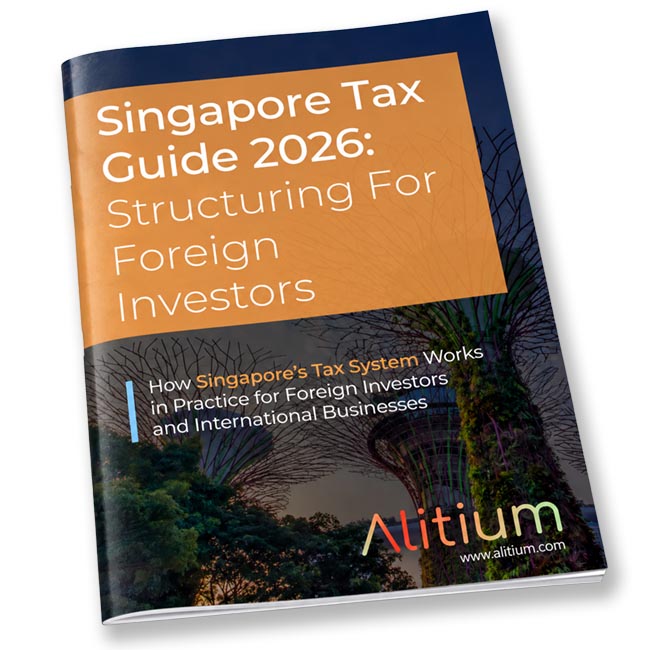
Alitium’s Singapore Tax Guide 2026 explains these issues in a practical business context. Written for foreign investors and international businesses, it brings together the principal taxes, structuring considerations and compliance obligations relevant to establishing and operating in Singapore.
Understanding your Singapore tax position
A sound tax structure starts with understanding the business itself: its activities, management, people, customers and investment flows.
A Singapore trading company, a regional services business and an investment holding company may face different tax considerations, even where they have the same shareholders. Decisions made during establishment can also affect future access to exemptions, the treatment of overseas income and the tax consequences of an eventual restructuring or disposal.
For investors, six areas deserve particular attention:
1. Corporate income tax and the effective tax cost
The headline corporate tax rate does not necessarily represent the final tax payable. Accounting profit must first be adjusted for tax purposes, taking account of deductible expenses, non-taxable income, capital allowances and available reliefs.
Eligible businesses may benefit from the Start-Up Tax Exemption or Partial Tax Exemption, while other incentives and reliefs depend on specific qualifying conditions.
The practical lesson is to forecast tax using the company’s expected activities and expenditure. Applying 17% directly to accounting profit can produce a misleading estimate of the cash tax cost.
2. Tax residence and commercial substance
Incorporating a company in Singapore does not automatically make it Singapore tax resident. Corporate tax residence generally depends on where the business’s control and management are exercised, including where key strategic decisions are made.
This distinction matters when assessing treaty access and certain exemptions. It is particularly relevant for foreign-owned companies whose directors, shareholders or senior management are based overseas.
A regional structure should therefore connect the Singapore company’s intended role with its actual decision-making, functions and activities. Governance arrangements should reflect how the business operates in practice.
3. Foreign-sourced income and tax treaty access
Businesses using Singapore as a regional hub need to consider how overseas income is treated when received in Singapore. Certain foreign-sourced dividends, branch profits and service income may qualify for exemption, subject to the applicable conditions.
Tax treaties can also help address double taxation and may reduce withholding taxes on qualifying cross-border income. Access depends on the relevant agreement and the company’s circumstances; Singapore incorporation alone does not establish entitlement.
Before implementing a structure, businesses should map the expected flow of income and assess the tax treatment in both Singapore and the other jurisdictions involved.
4. GST and cross-border payments
Goods and Services Tax is a separate consideration from corporate income tax. Businesses should assess registration obligations, the treatment of their supplies and their entitlement to recover input tax.
Cross-border payments require their own review. Interest, royalties and certain service payments to non-residents may create withholding tax obligations, subject to domestic rules and any applicable treaty relief.
Reviewing these matters when contracts and payment arrangements are being developed helps businesses understand the full cost of a transaction and prepare for the associated compliance requirements.
5. Transfer pricing and related-party transactions
Management fees, intercompany loans, service charges and intellectual property arrangements should be supported by a clear commercial rationale and appropriate pricing.
The key questions are practical: what does each entity do, what benefit does the recipient receive, what risks does each party assume and how was the price determined?
Written agreements, supporting analysis and consistent implementation help businesses explain their arrangements. Transfer pricing should be considered when transactions are established and reviewed as the group’s activities evolve.
6. Holding structures, investment gains and international developments
Singapore can provide a platform for holding investments and coordinating regional operations. Its suitability depends on the commercial purpose of the structure, the income it will receive and the activities undertaken locally.
Investors should also avoid assuming that every disposal gain falls outside the tax net. The nature of the gain and the relevant exemption or foreign asset disposal rules need to be assessed.
For large multinational groups, Pillar Two adds another layer to investment and incentive decisions. A concessionary local tax rate should be evaluated alongside the group’s wider minimum tax position.
Building compliance into everyday operations
Tax compliance works best when it forms part of normal financial management.
Businesses should maintain a calendar covering corporate income tax filings, GST returns, withholding tax, employee income reporting and any relevant tax clearance obligations. Supporting records and transfer pricing documentation should be maintained as transactions occur.
Before establishing or reviewing a Singapore structure, ask:
Does the company’s management and activity support its intended role?
Have the tax consequences of each major income and payment flow been assessed?
Are intercompany charges supported by agreements and pricing analysis?
Have GST and withholding tax obligations been considered?
Is responsibility for filings, payments and supporting records clearly assigned?
These questions help identify issues early, while there is still time to address them.
Download the complete Singapore Tax Guide 2026
The full guide expands on these topics with worked examples, explanations of exemptions and reliefs, a tax compliance checklist and common mistakes businesses should avoid.
It also covers tax incentives, individual and foreign employee taxation, stamp duty and the tax treatment of Singapore holding companies.
Whether you are entering Singapore, expanding an existing business or reviewing a regional structure, the guide provides a practical starting point for understanding the questions that matter.
Speak with Alitium
Alitium supports international businesses across Singapore, Vietnam and Malaysia with market entry, corporate advisory, tax, accounting, HR and compliance services.
Our team helps clients connect tax considerations with their commercial objectives, from establishing a company to managing cross-border operations and reviewing investment structures.
To discuss your Singapore plans, contact Singapore@Alitium.com.
********
This article is provided for general informational purposes only and does not constitute legal, tax or professional advice. Specific tax and compliance outcomes will depend on the facts and circumstances of each case. Professional advice should be obtained before implementing or restructuring a Singapore structure. Alitium accepts no liability for actions taken in reliance on this article