Vietnam Payroll & HR Compliance Update: August 2026

Vietnamese employers face important payroll and HR compliance developments affecting personal income tax, compulsory social insurance and employee data administration. This August 2026 update outlines practical implications for payroll processing, employment documentation and internal compliance. It also highlights areas requiring careful review of policies, calculations and employee records to support consistent implementation and reduce compliance risk.
2026-2027 Vietnam Compliance Calendar

Stay ahead of Vietnam’s compliance obligations with Alitium’s 2026-2027 Vietnam Compliance Calendar, providing a practical companion for finance, HR, and corporate teams managing tax, labour, and investment reporting across the year.
Singapore Asset Management 2026: Three New MAS Measures Businesses Need to Know

The Monetary Authority of Singapore has announced three measures to reinforce Singapore’s position as a leading asset management hub. The initiatives include a proposed tax exemption for qualifying profit-related returns, a fund management service supporting Asian fund managers seeking to expand, and enhanced overseas networks and expertise through new talent and residency pathways. This article explains the measures and their potential implications for fund managers and investors.
Vietnam F&B Guide 2026: A Market Entry Handbook for the Food & Beverage industry for Foreign Investors
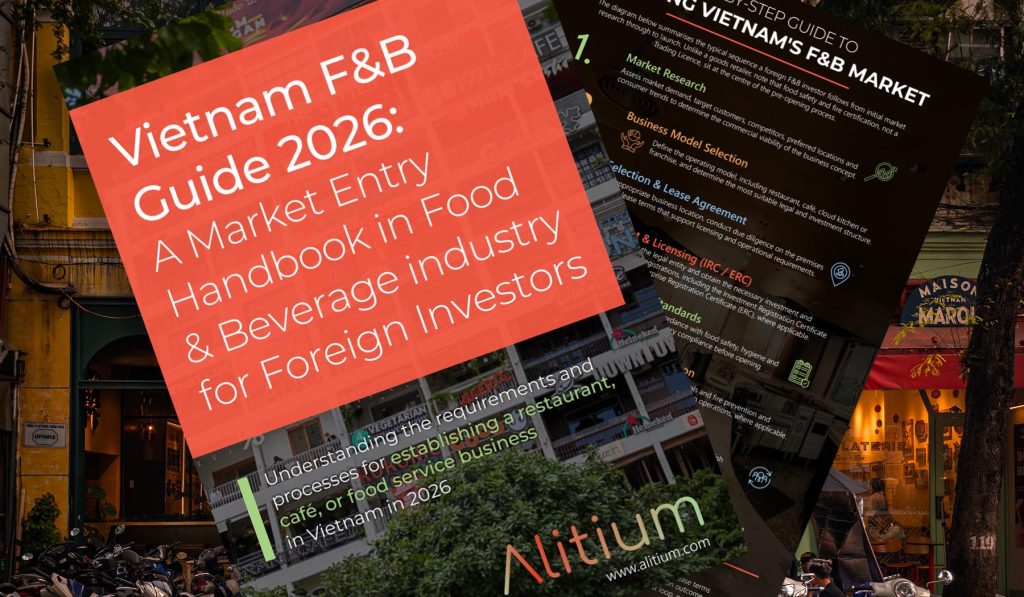
Vietnam’s food and beverage sector offers strong growth potential, but successful entry depends on getting the structure, premises and licensing sequence right. Alitium’s Vietnam F&B Guide 2026 provides foreign investors with a practical overview of site selection, investment and company setup, food and fire safety approvals, employment, tax, digital delivery, risk management and operational compliance. It also includes regional comparisons and a practical 90-day market entry roadmap.
Vietnam Payroll Compliance: When Insurance Contributions Must Be Paid Through Salary

When an employee is not required to participate in one or more of Vietnam’s compulsory insurance schemes, the employer may need to pay the corresponding employer contribution directly through salary. This article explains Article 168.3 of the Labour Code, the treatment of employees with multiple labour contracts, the related Personal Income Tax implications, and the employment contract, payroll documentation and review measures employers should implement.
Establishing Your Business in Singapore 2026: A Practical Guide for Foreign Investors
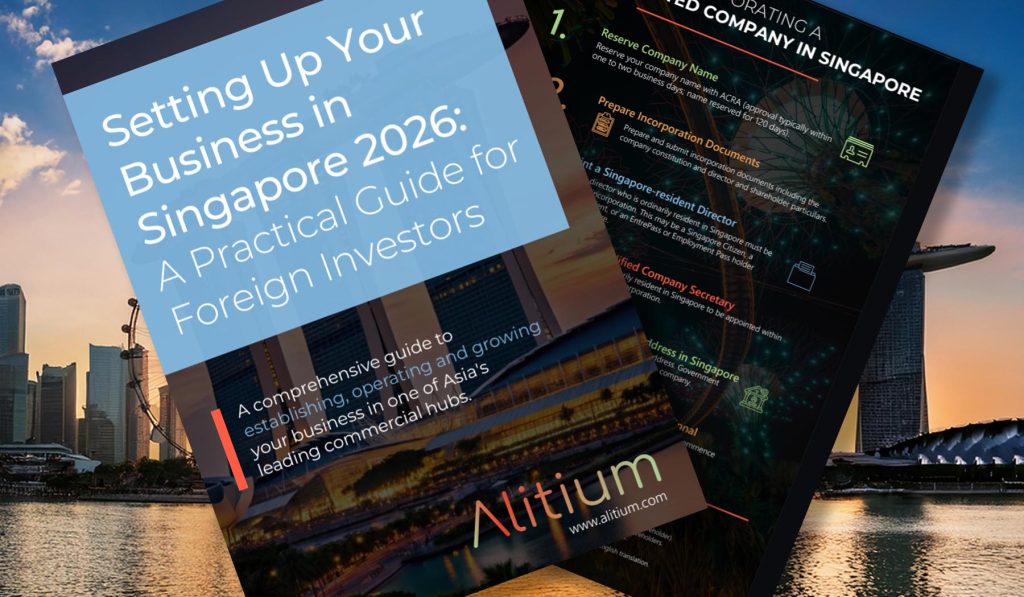
Alitium’s 2026 guide provides foreign investors with a practical overview of establishing and operating a business in Singapore. It examines available business structures, company incorporation, governance, taxation, KYC and AML requirements, corporate banking, employment passes and ongoing compliance. The guide also explains how careful planning can help investors establish an effective Singapore base for regional and international growth.
Offshore Deals Can Still Create Vietnamese Tax Liabilities
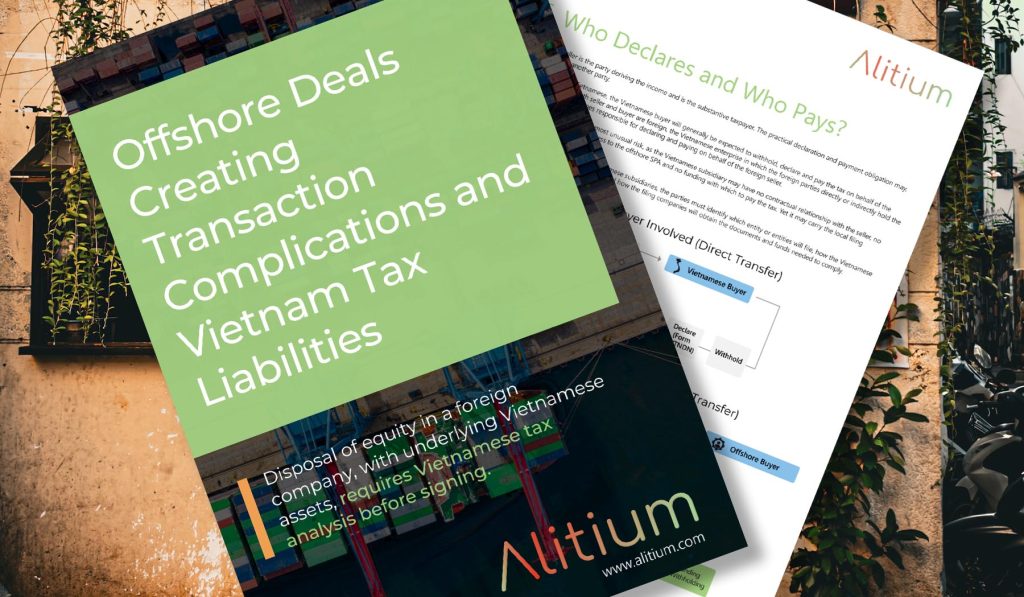
Selling shares in an offshore holding company does not necessarily place a transaction outside Vietnam’s tax system. Vietnam’s updated indirect transfer rules can impose corporate income tax at 2% of gross sale proceeds, including where the seller makes no profit. This guide examines the legislative framework, treaty relief, internal restructurings, filing obligations, buyer due diligence, purchase-price allocation and the protections that should be included in the SPA.
Vietnam’s Provincial Natural Disaster Prevention and Control Fund in 2026

Vietnam employers face annual company and employee obligations for the Provincial Natural Disaster Prevention and Control Fund. This article explains how company contributions are calculated, the employer’s role in collecting employee contributions, applicable payment deadlines and documentation requirements. It also considers PIT deductibility for employees, penalties for non-compliance and the importance of checking each locality’s annual payment notice and remittance instructions.
Changes to VAT Adjustments in Vietnam in 2026

Circular 89/2026/TT-BTC introduces a simplified approach to input VAT adjustments in Vietnam from 1 July 2026. The expanded scope of Items 37 and 38 of Form 01/GTGT allows taxpayers to record qualifying adjustments directly in the current VAT return, without filing a supplementary return for the original period. The changes apply to specified payment, invoice and input VAT correction scenarios, reducing administrative burdens while preserving separate requirements for output VAT corrections.
Beyond Vietnam’s New PIT Rules: Key Practical Considerations Under Decree 253 and Circular 87

Vietnam’s new Personal Income Tax framework under Decree 253 and Circular 87 introduces significant reforms, but successful implementation depends on more than understanding the legislation. This article examines five practical areas where employers should exercise care, including termination payments, overtime, post-employment income, employee awards, dependant registrations and new deduction claims, together with practical governance measures to reduce payroll and tax compliance risk.